The answer in three sentences
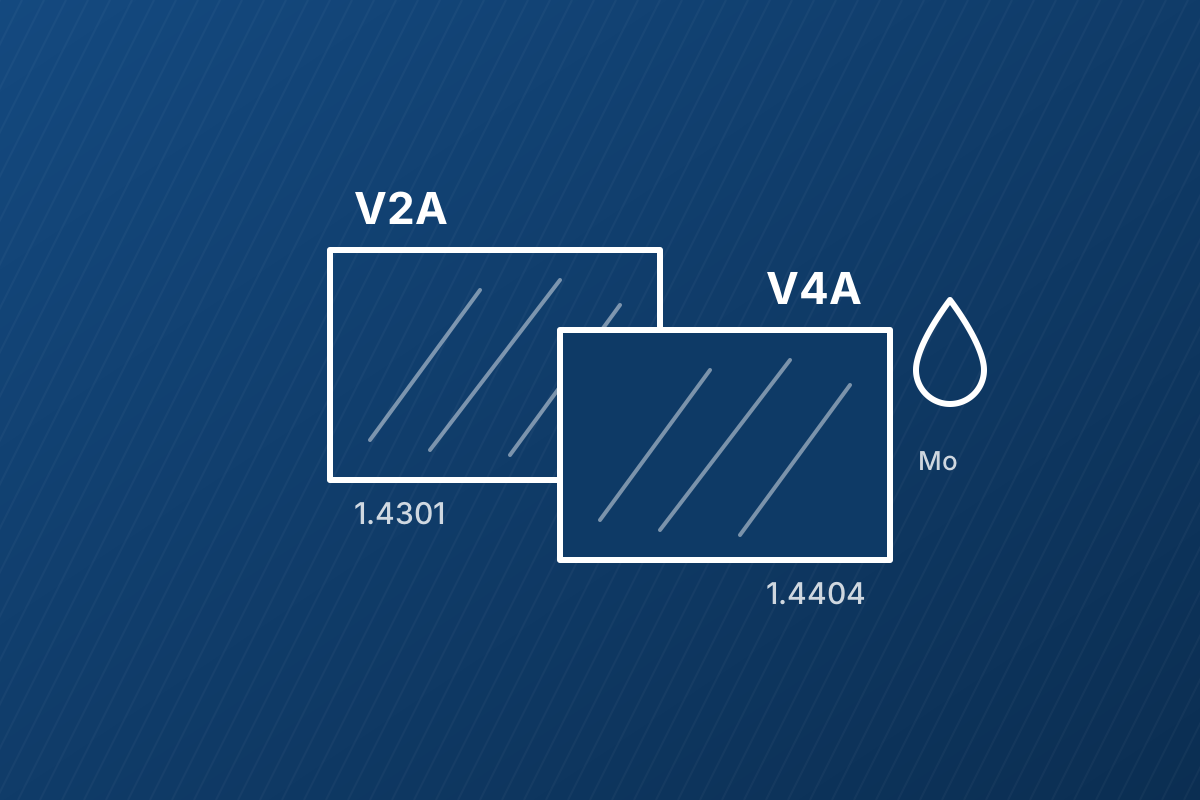
For most stainless steel furniture in kitchens and food service, V2A (material 1.4301) is the right choice: corrosion-resistant, food-safe and easy to work with.
V4A (material 1.4404 or 1.4571) also contains molybdenum and is considerably more resistant to chlorides, i.e. to salt, brine and chlorine-based cleaning agents.
V4A is worth it where such substances act on the steel over long periods. Everywhere else, with V4A you are paying for a resistance you don’t need.
V2A and V4A at a glance
| V2A | V4A | |
|---|---|---|
| Material number | 1.4301 (X5CrNi18-10) | 1.4404 (X2CrNiMo17-12-2) or 1.4571 (X6CrNiMoTi17-12-2) |
| Alloy | around 18% chromium, 8 to 10.5% nickel | around 17% chromium, 10 to 13% nickel, 2 to 2.5% molybdenum |
| Corrosion resistance | good against water, food and standard cleaning agents | higher, especially against chlorides such as salt and chlorine-based agents |
| Typical use | Work tables, sink units, cabinets, shelving, counters, extractor hoods | Fish processing, brine and curing, environments with seawater or swimming pool water |
| Price | Standard in food service | considerably more expensive than V2A |
What to look out for when buying
Ask for the material grade
Reputable suppliers state the material number. “Stainless steel” alone says little: cheap furniture is often made from ferritic chromium steel such as 1.4016. It contains no nickel and is less corrosion-resistant than V2A.
Use the magnet test with caution
V2A and V4A are barely magnetic in their original state, whereas ferritic chromium steel is clearly magnetic. However, bending and cold forming can make even V2A slightly magnetic. So the test only gives an indication.
Check the workmanship
Look for sufficient material thickness and reinforcement under worktops, clean and properly finished welds, and an evenly ground surface without sharp edges.
When V4A is worth it
For work tables, cabinets, counters and hoods in a normal restaurant or commercial kitchen, V2A is generally sufficient. Our charcoal grill The Ocakbaşı, for example, is made from 1.4301.
Keeping stainless steel looking good
Cleaning it properly
Warm water, a mild detergent and a soft cloth are usually enough. On brushed surfaces, wipe in the direction of the grain and then dry off.
What to avoid
No steel wool and no wire brushes made of ordinary steel: particles become embedded and rust. Chlorine-based cleaners and hydrochloric acid attack stainless steel. If they are unavoidable, rinse thoroughly with clean water afterwards.
Removing rust stains
Brown stains are usually extraneous rust, i.e. rust from foreign iron particles on the surface. It can generally be removed with a stainless steel cleaner. The stainless steel itself is not damaged.
Questions about V2A and V4A
Is stainless steel food-safe?
V2A (1.4301) and V4A (1.4404, 1.4571) are the standard materials for contact with food and are used in kitchens, butcher’s shops and the food industry.
Can stainless steel rust?
Yes, under unfavourable conditions. The most common causes are chlorides such as salt or chlorine-based cleaners, which can lead to pitting corrosion, and extraneous rust from iron particles on the surface. V4A is considerably more resistant to chlorides.
What do V2A and V4A mean?
The names come from “Versuchsschmelze 2 Austenit” and “Versuchsschmelze 4 Austenit” (experimental melt 2 and 4, austenite) at the Krupp company in the early 20th century. Today, the materials are designated by their material numbers, such as 1.4301 or 1.4404.
Which stainless steel is right for my project?
That depends on what happens on the surface and how it is cleaned. Tell us about your application and we will be happy to advise you personally.
Sources and further information
- EN 10088-1: Stainless steels, list of stainless steels
- Information sheets from the German Stainless Steel Information Centre (Informationsstelle Edelstahl Rostfrei)
As of September 2026. This information does not replace individual advice.
 Stainless steel finishes explained: 2B, ground, brushed, polishedWhat the EN 10088-2 codes mean and which finish suits which use.Read more
 Stainless steel wall cladding in the kitchen: when it pays offStainless steel or tiles, where cladding proves its worth and what matters during installation.Read more
 Cleaning and caring for stainless steelDaily cleaning, common mistakes and what helps against which stains.Read more
Planning a project?
Give us a brief description of your plans. We will advise you in person and prepare a quotation for you.