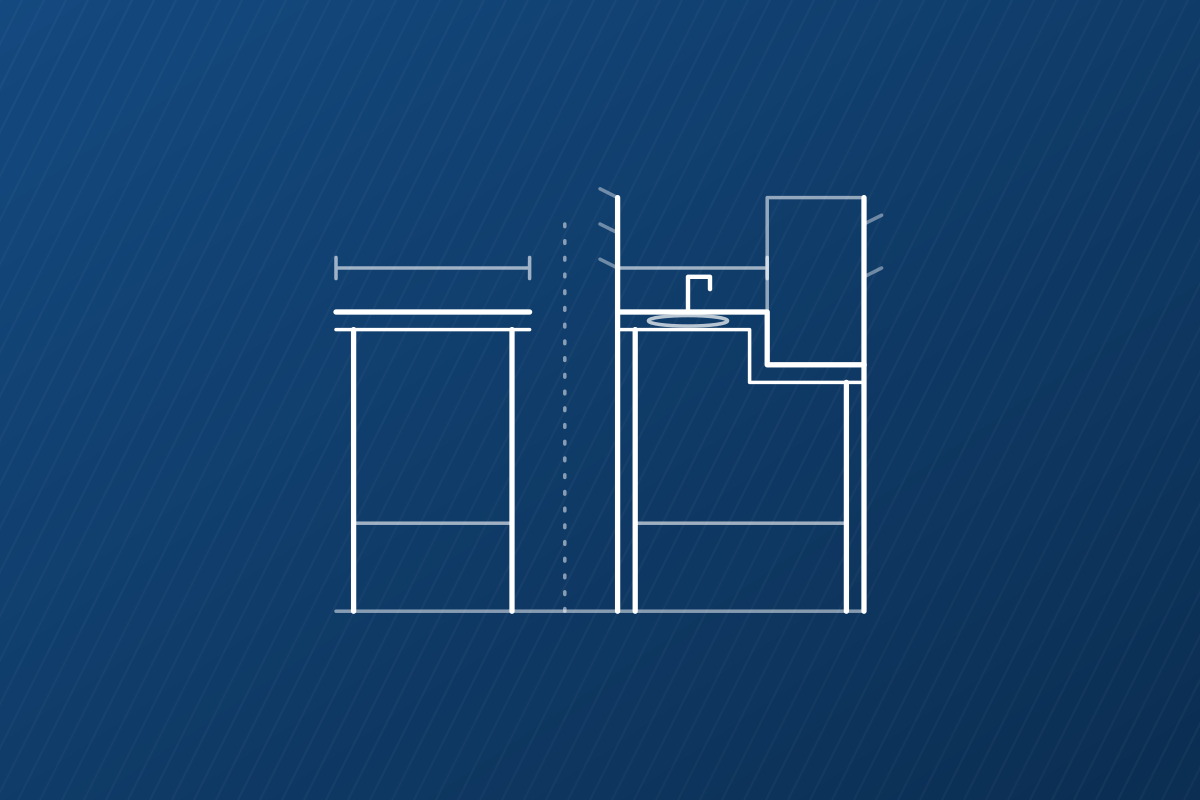
Key points at a glance
- Standard furniture comes in fixed size increments; depths of 600 and 700 mm and stepped lengths are usual.
- For free-standing tables, urgent needs and tight budgets, standard is usually the sensible choice.
- Made-to-measure pays off for niches, sloping walls, columns, continuous worktops, built-in items and food trucks.
- A mix is often best: standard where it fits, and made to measure where the standard increments do not work.
What standard furniture is
Standard stainless steel furniture is series-produced in fixed sizes. Depths of 600 and 700 mm are usual, and some manufacturers also offer 800 mm. Lengths are stepped, often in increments of 100 or 200 mm. Working heights of 850 or 900 mm are common. The exact increments differ from manufacturer to manufacturer.
Made-to-measure furniture, by contrast, is built for a specific room and a specific workflow. Length, depth, height, cut-outs and base unit are determined by your kitchen. Neither solution is better in principle. It depends on the space and the task.
When standard sizes are the sensible choice
Free-standing furniture
A work table in the middle of the room or against a straight, clear wall does not have to fit to the millimetre. Here a standard size usually serves its purpose without any drawback.
Urgent needs
Series-produced furniture is often available from stock. If you need an extra set-down surface or shelving at short notice, this will generally get you there faster than a one-off piece.
Tight budget
Series production is generally cheaper than one-off production. If the standard size fits, there is no reason to spend more. What to look for when choosing is covered in the guide Buying a work table.
When made-to-measure pays off
Difficult rooms
Niches, sloping walls, columns, projections and pipe boxing can rarely be filled neatly with standard increments. Gaps remain in which dirt collects. A made-to-measure piece uses the space completely.
Continuous surfaces
A one-piece worktop has no butt joints between individual tables. Bowls can be welded in seamlessly and cut-outs for built-in appliances positioned to suit. This makes cleaning easier. Regulation (EC) No 852/2004 requires smooth, easy-to-clean surfaces. How this is assessed in an individual case is decided by the food safety authority.
Special requirements
Special heights for particular workstations, base units to match existing appliances, counters and food truck fit-outs are typical cases. In a vehicle every centimetre counts, and hardly any dimension matches a catalogue increment.
Appliances, refrigeration and connections for electricity, gas and water are not part of furniture making. These are handled by Gastro Arena's kitchen planning and the relevant specialist contractors.
Six questions before deciding
A mix is often the best solution
Standard where it fits, and made to measure where the standard increments do not work. That keeps the budget for the places where it makes a difference. Make sure the height and depth of the furniture match.
What you need for a made-to-measure enquiry
The dimensions of the installation space, measured at several points, a hand sketch showing connections, plinths and doors, and photos of the room and the corners. How to measure correctly is explained in the guide Site measurement and enquiry.
The more answers point to an unusual room or built-in items, the more likely made-to-measure is worthwhile. If the furniture is free-standing and needed urgently, there is a lot to be said for standard.
Questions about made-to-measure and standard
Is made-to-measure always better?
No. For a free-standing table or storage shelving, a standard size is usually perfectly adequate. Made-to-measure pays off where the room, hygiene or the workflow do not allow fixed increments.
Can I combine standard furniture and made-to-measure pieces?
Yes, that often makes sense. Make sure working height and depth match so that there are no steps or offsets. You should therefore state the dimensions of existing furniture in your enquiry.
Are joints between two tables a hygiene problem?
Joints and gaps are harder to clean than a continuous surface. Whether a solution is adequate in a given business is assessed case by case by the responsible food safety authority. More on this in the guide Hygiene standards.
What does INOXWERK make?
INOXWERK makes stainless steel furniture to measure, for example work tables, sink units, cabinets, shelving and counters. We clarify the details with you when you enquire. More under Custom stainless steel fabrication.
This guide gives a general overview and does not replace professional or legal advice.
Sources and further information
- Regulation (EC) No 852/2004 on the hygiene of foodstuffs, Annex II (EUR-Lex)
- DIN EN ISO 14159: Safety of machinery, hygiene requirements for the design of machinery
- Dimensions of series-produced furniture: catalogues from various manufacturers of stainless steel furniture for hospitality; increments vary by manufacturer
As of October 2026. This information does not replace individual advice.
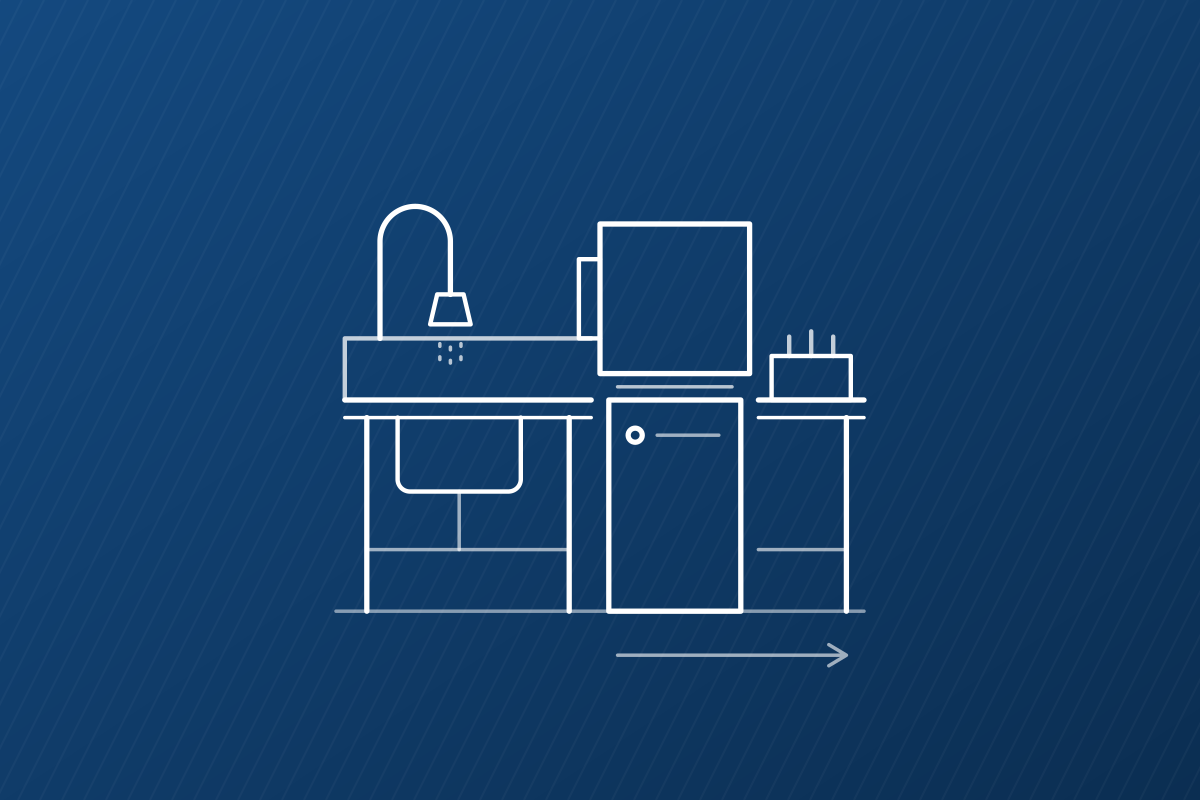 Planning sink units and wash-up areas: bowls, workflows, connectionsDirty and clean side, suitable bowls and connections settled in advance: how to plan the wash-up area.Read more
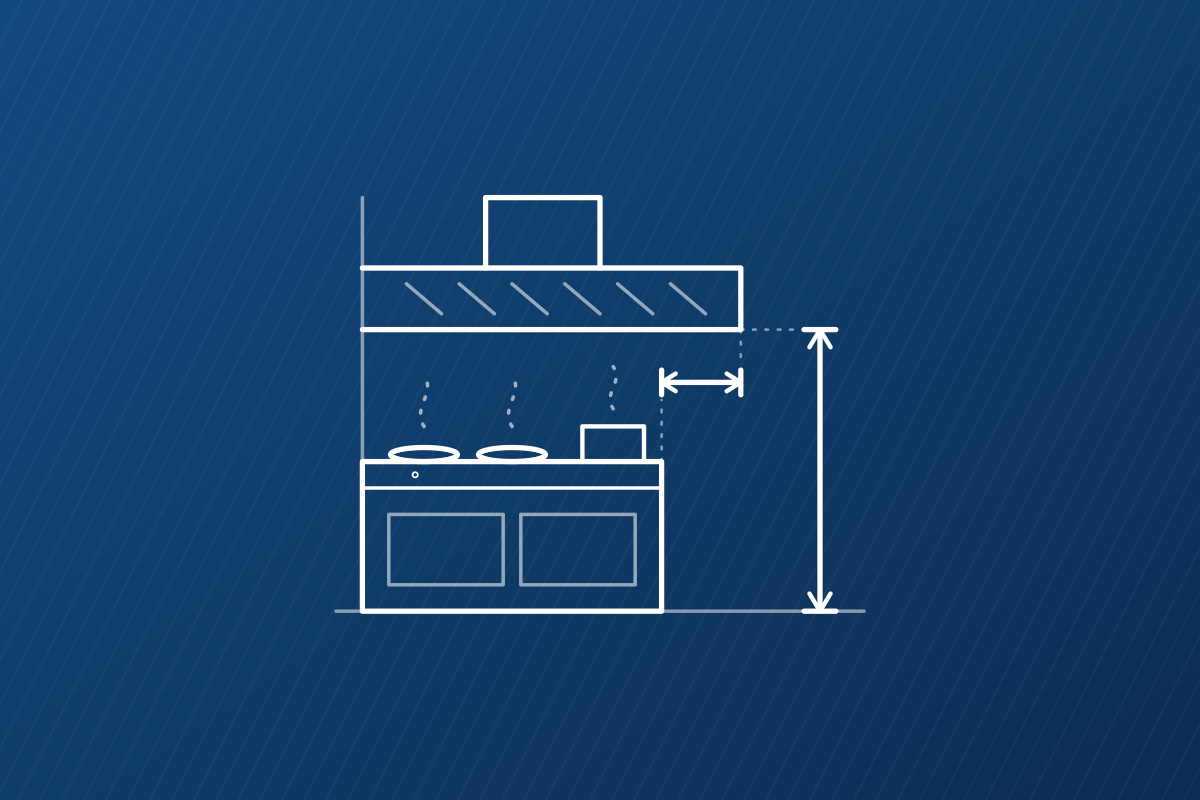 Sizing an extractor hood: size, overhang, designWhich hood suits the cooking line, how much overhang is needed and what is required for fabrication.Read more
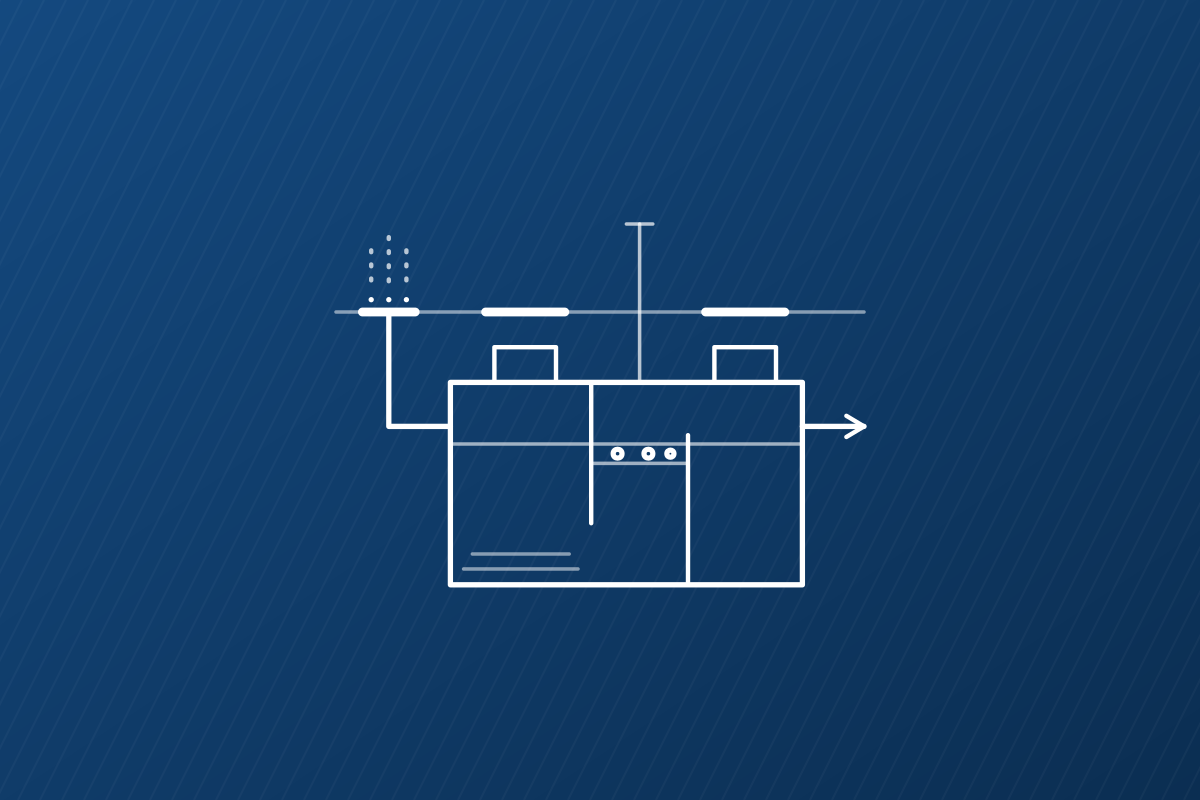 Grease separators and floor drains in the restaurant kitchenWhen a grease separator is mandatory, how it is operated and what drains mean for the furniture.Read more
Planning a project?
Give us a brief description of your plans. We will advise you in person and prepare a quotation for you.