Key points at a glance
- Whether a grease separator is required is decided by the local sewer network operator; in Berlin this is the water utility (Berliner Wasserbetriebe).
- The nominal size (NS) is calculated by a specialist planner under DIN EN 1825-2.
- Emptying at least once a month and a general inspection every five years at the latest are usual.
- The position of drains and channels should be fixed before stainless steel furniture is made.
When a grease separator is required
Wherever food is cooked, fried or dishes are washed commercially, the sewer network operator generally requires a grease separator. The basis is the local drainage or waste water by-law. In Berlin the operator is Berliner Wasserbetriebe, and installation there also requires a permit from the water authority.
Construction and sizing are described in DIN EN 1825-1 and DIN EN 1825-2, operation and testing in Germany in DIN 4040-100. Whether you need a system, and of what size, is decided case by case by the authority or the network operator.
Important as regards responsibility: grease separators and drainage are designed and built by specialist planners and specialist firms. INOXWERK makes the stainless steel furniture that has to fit with them.
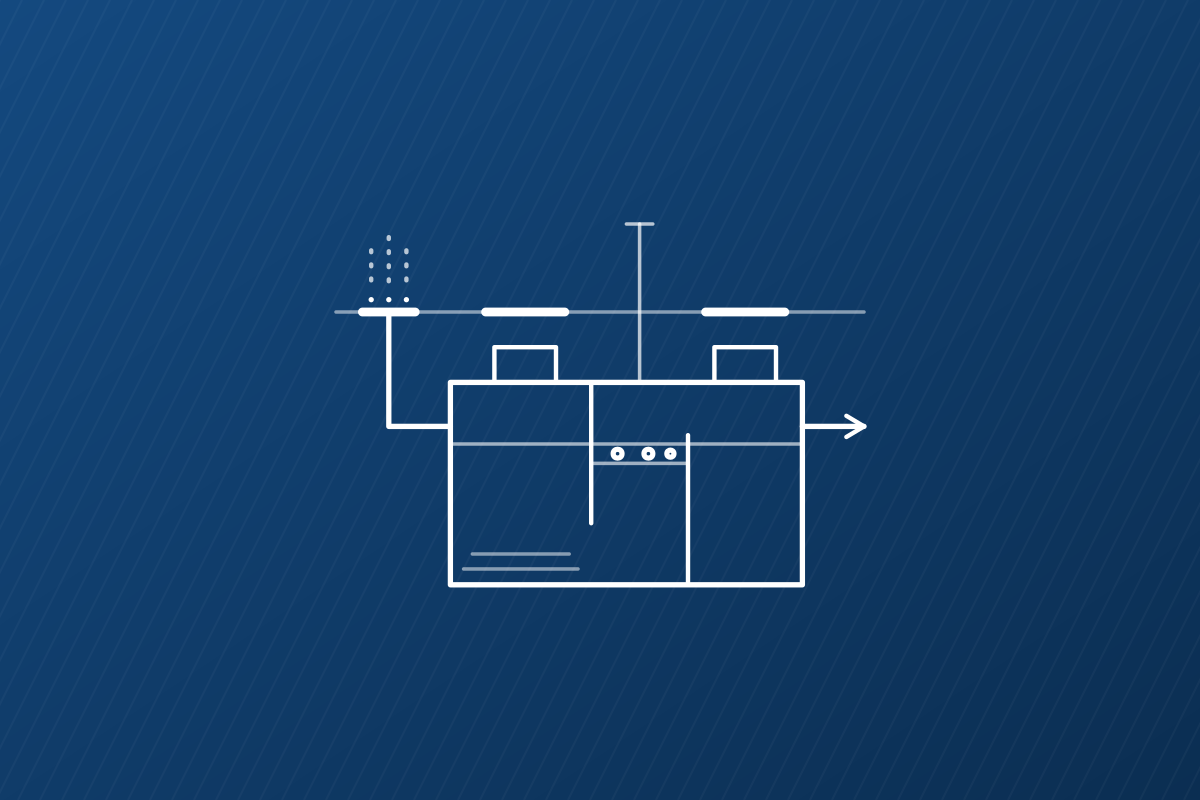
How the system works and where it is located
| Component | Task |
|---|---|
| Sludge trap | Food scraps and other heavy matter settle before the water runs into the separator. |
| Grease separator | The water becomes still. Fats and oils are lighter than water, rise and remain behind as a layer. |
| Sampling point | Downstream of the separator, the authority or the network operator can take a waste water sample. |
| Lifting station | If the system lies below the backflow level, for example in the basement, a downstream lifting station generally pumps the waste water into the sewer. |
The size is given as a nominal size (NS). It depends, among other things, on the volume of waste water, the temperature and the detergents used. Sizing is the job of a specialist planner.
Frost-free
Separators are either installed in the ground outside the building or free-standing in a frost-free room, often in the basement. Short inlet pipes are an advantage, because grease cools and settles in long pipes.
Accessible
The disposal contractor's suction vehicle must be able to reach the system. Inside the building, a permanently installed disposal pipe to the outside helps. Covers and openings must be kept clear.
Ventilated
Odours develop in the separator. The system is therefore generally vented above roof level. The pipe routing belongs in the building's drainage design.
Emptying, maintaining, documenting
Information under DIN 4040-100, as given by Berlin and other municipalities in their information sheets. Berlin recommends emptying every two weeks for preference. Your by-law, your official notice and the manufacturer's instructions are binding.
When taking over premises, it is worth looking at the paperwork: is there a permit, an operating log and a current inspection report? A change of operator usually has to be notified to the network operator or the authority.
Floor drains, channels and floor
Drains and channels
Floor drains and channels in the kitchen are usually made of stainless steel. They need an odour trap and a removable dirt trap. They are placed where a lot of water accumulates: in front of the tilting bratt pan and boiling kettle, in the dishwashing area, at the pot wash sink.
Falls and slip resistance
The floor must slope so that water runs to the drain and no puddles form. The German workplace rule ASR A1.5 and DGUV Regel 110-003 require slip-resistant floor coverings in kitchens. The rating group required depends on the type and size of the kitchen.
What this means for the furniture: sink units, basins and appliances with a drain need a connection within reach. Feet or plinths must not stand on channels and gratings, and drains must remain accessible for cleaning. The position of the drains and the falls should therefore be fixed before work tables and sink units are made. More on the sequence in the guides Planning a restaurant kitchen and Site measurement.
Questions about grease separators and floor drains
Does every restaurant need a grease separator?
As a rule yes, as soon as wastewater containing grease is produced. Exceptions for very small businesses are possible, but only the sewer network operator or the authority decides on that. Ask them before you sign a lease.
How large does the grease separator have to be?
There is no general answer. A specialist planner calculates the nominal size under DIN EN 1825-2 from the appliances, the volume of wastewater and other factors.
How often does the grease separator have to be emptied?
DIN 4040-100 and many municipal guidance sheets specify at least once a month. Different intervals are only possible with the consent of the sewer network operator or the authority.
Does INOXWERK supply grease separators or floor drains?
No. Grease separators, pipework and floor drains are planned and installed by specialist drainage contractors. INOXWERK makes the stainless steel furniture and matches dimensions, feet and cut-outs to the existing drains.
What do I need to check when taking over a kitchen?
Ask to see the permit, the operating log, the disposal records and the latest general inspection report. If these documents are missing, clarify the situation with the sewer network operator before you invest.
This guide gives a general overview and does not replace specialist or legal advice. In each individual case, the authority, the sewer network operator and the specialist planner decide.
Sources and further information
- Construction and operation of grease separators (State of Berlin, water authority, in German)
- ASR A1.5 Floors (BAuA, in German)
- DIN EN 1825-1 and DIN EN 1825-2: Grease separators
- DIN 4040-100: Grease separators, requirements for the use of grease separators in accordance with DIN EN 1825
- DGUV Regel 110-003: Commercial kitchens sector
As of October 2026. This information does not replace individual advice.
 Fitting out a bar or café: stainless steel behind the counterStations, ice well, glass sink, knock box: what belongs on the working side of a bar or café.Read more
 Stainless steel for butchers, bakeries and food productionMaterial, hygienic design and typical furniture for businesses that produce food.Read more
 Planning a restaurant kitchen: zones, workflows and regulationsWork zones, short routes, hygiene and technical requirements, and how kitchen planning works.Read more
Planning a project?
Give us a brief description of your plans. We will advise you in person and prepare a quotation for you.